Evidence of a void beneath concrete
The slab sounds hollow, unsupported edges are visible, or material has washed out from beneath a driveway, patio, or floor.

Treat the soil problem when the soil is what moved. Most settlement is a water story, a compaction problem, or both. We fill the washed out voids under driveways, patios, walkways, and garage floors, and stabilize the soil that stopped supporting them. Testing determines whether shallow foam, deep injection, or another approach fits the site. Poly Flow also performs geotechnical soil work on canals, cisterns, and other structures. Call if your project falls outside residential.
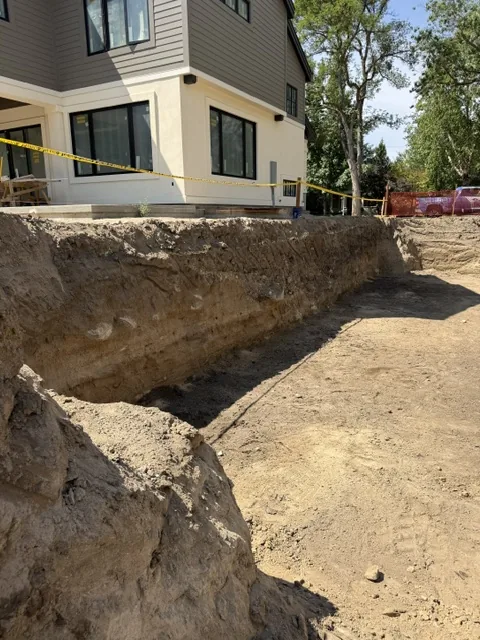
The slab sounds hollow, unsupported edges are visible, or material has washed out from beneath a driveway, patio, or floor.
Soil is disappearing around a downspout, a sump discharge, an irrigation line, or a concentrated runoff path beside the house.
Probing finds weak zones below the surface, or construction fill continues compressing under the weight of the structure above.
Patches reopen or a previously corrected surface moves again because the deeper support problem was never addressed.
We inspect the site and use probing or penetrometer readings to understand the depth and extent of the issue.
The access pattern and material are selected for the soil, structure, and load involved.
Material is injected to fill voids or improve support below the affected area.
We identify related water paths and may pair stabilization with joint sealing or drainage improvements.
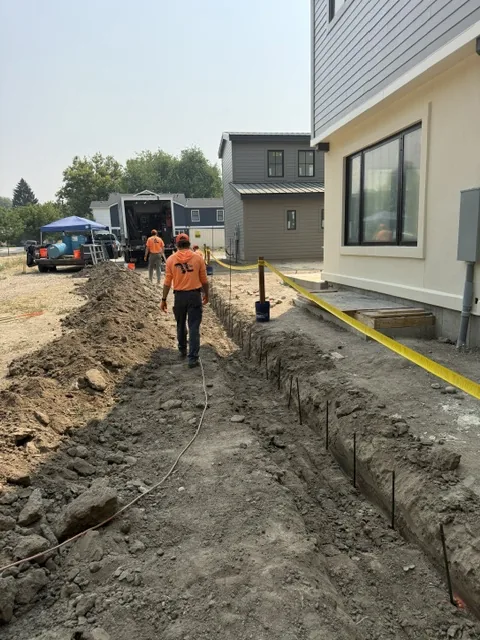
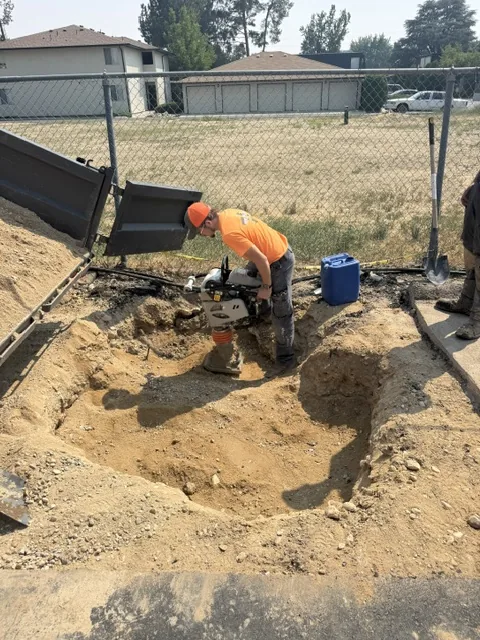
A Garden City patio beside the Boise River greenbelt had settled and heaved after erosion. Poly Flow documented voids at multiple depths, deep injection, a lift back to grade, drainage improvements, and joint sealing.
Most recent Poly Flow work documented for soil stabilization.
A homeowner built a concrete dam in a creek to create a pond for irrigation storage. During backfill, boulders and road mix were placed around the structure. Once the pond fi…
Read the projectEven with strong geotechnical planning, localized conditions can vary outside test areas. At this site, certain zones showed settlement in asphalt drive lanes and near storag…
Read the projectImproper drainage and insufficient compaction caused erosion beneath a shop floor, creating voids in the sub-base. The underlying soils were also not ideal load-bearing mater…
Read the projectA durable repair starts with the right diagnosis. Use these answers to understand the options, compare proposals, and know what a site-specific evaluation still needs to determine.
Visible settlement alone does not identify the cause. A useful investigation starts with the history of movement, drainage and leaks, then compares elevations, cracks, slab response and accessible soil conditions. Sounding, probing, test holes, ground-penetrating radar or geotechnical testing may be appropriate, depending on the structure and site. A void is an open space beneath or beside a structure; weak soil is material that exists but cannot provide adequate support. They require different injection strategies. For a Poly Flow project, the proposed scope should state what was observed, what remains uncertain and why shallow void filling or deeper soil treatment is being considered. If movement may involve bearing soils, foundation design, slope stability or structural damage, a geotechnical or structural engineer should help diagnose the problem before repair decisions are made.
Injection may be worth evaluating when accessible slabs, foundations, canal edges, cisterns, retaining structures or other supported elements have documented voids or localized weak soil that can be reached from practical injection locations. Shallow injection is generally considered for filling spaces directly beneath or around a structure. Deeper injection may be considered when loose or weak zones extend below the immediate interface. Suitability depends on soil type, groundwater, utilities, structural condition, access and the source of soil loss. Poly Flow-specific recommendations should follow site evaluation rather than assumptions based only on cracks or uneven surfaces. The best candidates also have a plan to control contributing water. Injection can restore contact or improve targeted soil zones when suitable, but it is not automatically the right response to every instance of settlement, leakage or erosion.
Injection may be a poor fit when the underlying cause is still active and uncontrolled, the structure is too damaged to respond safely, soils are unsuitable for predictable treatment, or movement involves a broad slope or deep geologic condition beyond the proposed treatment zone. It also does not replace failed waterproofing, broken piping, drainage correction, seawall or canal-wall reconstruction, foundation redesign, or structural repair. Around cisterns and water-related structures, material compatibility, containment, access and potential pathways into water must be evaluated carefully. A Poly Flow proposal should identify exclusions and avoid presenting injection as a universal fix. When loads, stability, reinforcement, deep bearing conditions or public-water concerns are involved, the owner should expect input from the appropriate structural, geotechnical, plumbing, environmental or water-system professional before work proceeds.
Pre-work planning should establish the treatment objective: filling a known void, improving a weak zone, reducing pathways for erosion, supporting a slab, or some combination. The contractor should review available plans, utility markings, drainage patterns, leak history and prior repairs; document elevations and distress; and explain any recommended probing, scanning, borings or soil testing. General testing methods have limits, so results should be interpreted together rather than treated as certainty. For Poly Flow work, ask for a written injection layout, anticipated depths, injection sequence, access points, monitoring method and stop criteria. Deep injection deserves particular care because subsurface conditions can vary between test locations. Where the treatment could affect a loaded foundation, retaining structure, canal edge or adjacent property, engineering review may be needed to define safe pressures and performance objectives.
The crew typically confirms utilities and work zones, records baseline conditions, drills or installs injection points, and introduces material in controlled stages. Shallow points target contact gaps or nearby voids; deeper points are arranged to reach selected soil zones. The exact material, spacing, pressure and volume should be chosen for the site rather than copied from another project. During injection, crews may watch elevations, cracks, gauges, material return, surface movement and pressure response. These observations help determine when to pause, relocate or stop. Poly Flow-specific methods should be described in the contractor's scope, including whether lifting is intended or whether the goal is only stabilization or void fill. Injection is performed below the surface, so direct visual confirmation is limited; records and post-work monitoring are important parts of responsible execution.
The right comparison depends on the diagnosed cause. Alternatives may include drainage improvements, leak repair, excavation and recompaction, removal and replacement of a slab, conventional grouting, underpinning, piers, soil mixing, retaining-system repair, erosion-control work, or rebuilding a failed component. Some projects need a combination: for example, stopping a water source first and then filling the resulting void. Compare options by treatment depth, ability to verify the affected zone, structural implications, access, disruption, future inspectability and how each addresses ongoing water. Poly Flow injection may offer a less invasive access approach when conditions are suitable, but that is a project-specific consideration, not proof that it is superior in every setting. Ask an independent engineer to compare concepts when foundation capacity, retaining stability, canal conditions or substantial structural movement is at issue.
Durability depends less on a single material description than on diagnosis, placement, soil conditions, loading and whether the cause of soil loss has been controlled. Properly placed material may remain in the treated zone, but untreated soil can still consolidate, wash out or move. Water can also find a new path. Injection cannot make variable ground uniform, repair structural members, or guarantee that cracks will close or never return. It may not reach every isolated pocket, and subsurface coverage cannot always be directly observed. For any Poly Flow scope, ask what is expected to improve, what is specifically not promised, how completion will be documented and what conditions could require additional treatment. Long-term drainage maintenance and monitoring remain important even when the immediate treatment objective is achieved.
Injection usually uses localized access points, but the real disruption depends on access, drilling depth, equipment placement, noise, dust, landscaping, interior finishes and water-management needs. Furniture, vehicles, boats or stored items may need to move. Crews may need hoses across travel paths, temporary exclusion areas, or access through floors and hardscape. Work near canals, cisterns or active leaks can require additional containment and sequencing, while retaining structures may need movement limits or temporary precautions. Ask Poly Flow for a site-specific access plan rather than assuming the work will be invisible. The plan should identify expected hole locations and patching, cleanup responsibilities, utility risks, areas that cannot be occupied, and whether water use or drainage must be modified before, during or after injection.
Major cost drivers include the size and depth of the treatment zone, whether the problem is an open void or weak soil, the number of injection points, material volume, drilling requirements and ease of equipment access. Testing, engineering, utility conflicts, groundwater, active erosion, containment near water, difficult surfaces and restoration can add scope. A deeper treatment is not priced simply by square footage because geology and response during injection influence effort and material use. Compare Poly Flow proposals by assumptions and included tasks, not only by the total. Ask whether investigation, mobilization, permits if applicable, monitoring, patching, drainage work, engineering, additional material and return visits are included or separate. Unusually precise pricing before diagnosis may hide exclusions or rely on assumptions that should be stated in writing.
Before hiring, ask who diagnoses the cause, who selects depths and pressures, what experience the crew has with your type of structure, and when an engineer is involved. Request the proposed material, injection map, baseline measurements, stop criteria, exclusions, change-order process and documentation you will receive. Also ask how unexpected material migration, uplift, utility damage or water pathways would be handled. After Poly Flow work, follow written restrictions for the treated area and inspect patches, drainage, plumbing and nearby surfaces. Keep dated photographs and repeat elevation or crack measurements at agreed intervals. Report sudden movement, new leakage or rapidly changing cracks promptly. Monitoring does not mean the repair failed; it recognizes that soil and water conditions evolve. Clarify any written workmanship or material terms, their exclusions, and who evaluates future movement before signing.
Estimates are free and done on site. We test the soil before we quote, so the price reflects the actual problem.