Open or failing control joints
Old sealant is missing, split, or detached, leaving a direct path for rain, snowmelt, and irrigation water.

Keep water from turning a small opening into a support problem. Cracks and control joints can let surface water reach the sub-base. We seal them as part of a plan to protect the concrete and the material supporting it. If the slab has already moved, we test first so sealing is paired with the right repair instead of hiding the cause.
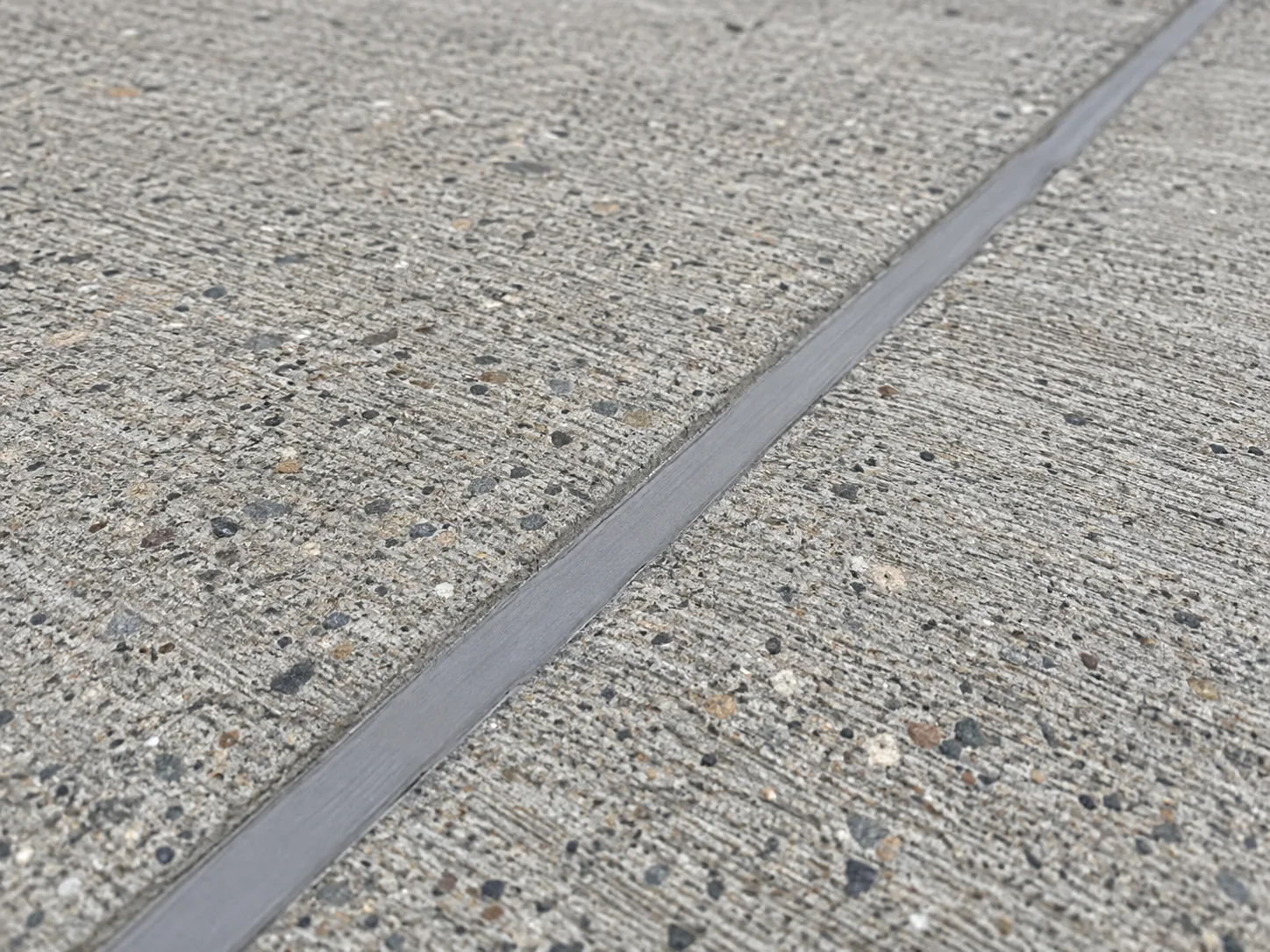
Old sealant is missing, split, or detached, leaving a direct path for rain, snowmelt, and irrigation water.
The opening stays wet, traps dirt, or allows weeds to grow, making continued water entry more likely.
Joints beside foundations, steps, curbs, or pool coping have opened and no longer shed water as intended.
A joint keeps separating because the surrounding concrete has moved, which may require lifting or stabilization before sealing.
We inspect the crack or joint and the surrounding slab before recommending a seal.
The opening is cleaned and prepared so the sealing material can bond to the concrete.
We apply the appropriate seal to help limit surface-water entry.
If water has washed out the sub-base, we discuss void fill, lifting, or soil stabilization too.
Tom from Eagle said the sealed joints looked great and matched the sidewalk concrete, describing the job as professional and on time.
Most recent Poly Flow work documented for crack and joint sealing.
Cracks at the base of grain bins were allowing water to enter the silo, causing grain rot and financial loss. Previous attempts using surface sealants and even spray foam coa…
Read the projectThis site presented two related issues. Water was leaking around the main pipe entering the cistern, escaping through concrete at the penetration. Over time, the leak caused…
Read the projectA durable repair starts with the right diagnosis. Use these answers to understand the options, compare proposals, and know what a site-specific evaluation still needs to determine.
Start by documenting when and where moisture appears. Note whether it follows rain, snowmelt, irrigation, or washing, and whether it emerges directly along a crack or joint. A contractor should inspect grading, downspouts, adjacent walls, plumbing, and other possible sources before recommending sealing. Dark concrete alone does not prove active leakage, and water can travel beneath or through a slab before becoming visible. Ask Poly Flow to explain the evidence supporting its diagnosis, what conditions were observed, and whether further testing is warranted. Crack and joint sealing can reduce water entering through the treated opening, but it does not correct poor drainage, hydrostatic pressure, hidden plumbing leaks, or moisture moving through untreated concrete or nearby assemblies.
A control joint is an intentional groove or cut intended to encourage drying-shrinkage cracking at a planned location. A crack is an unplanned separation that may result from shrinkage, settlement, loading, temperature change, or other movement. Isolation or expansion joints are intentional separations that allow adjacent slabs, walls, columns, or other elements to move more independently; terminology and construction details vary. These openings should not automatically receive the same material or preparation. Width, depth, edge condition, expected movement, traffic, and existing filler all matter. Ask Poly Flow to identify each opening cautiously and explain the proposed detail. General education cannot establish how your joint was built; concealed conditions may only become apparent during preparation.
Sealing is generally a good fit when the goal is to limit surface-water entry, keep debris out, and accommodate normal opening-and-closing movement at accessible cracks or joints with sound edges. It may also make cleaning easier. It is not a structural repair and does not reconnect reinforcing steel, restore lost load capacity, lift a settled slab, fill substantial voids beneath concrete, or stop the cause of continuing movement. Wide, displaced, rapidly changing, or repeatedly reopening cracks deserve additional evaluation before cosmetic sealing. The same applies when slabs rock under load, edges are severely deteriorated, or water pressure comes from below. Ask Poly Flow which observed conditions support sealing and whether an engineer, drainage specialist, plumber, or slab-support contractor should evaluate the underlying issue first.
Preparation often determines whether a sealant can bond and move as intended. The opening may need loose concrete, dirt, vegetation, old sealant, oil, and incompatible coatings removed. Depending on the product and joint design, the installer may establish clean bonding surfaces, control sealant depth with backer material, and avoid bonding to the bottom of a moving joint. Surfaces must meet the selected product's requirements for soundness and moisture. Preparation can expose spalled edges, variable depth, or previous repairs that change the plan. Ask Poly Flow what will be removed, how dust and debris will be controlled, how depth will be set, and what happens if damp concrete or hidden deterioration is found. Simply covering a dirty opening is not equivalent to a properly detailed repair.
A typical project includes confirming the repair areas, protecting adjacent surfaces, mechanically or manually cleaning the openings, removing failed material, installing any required backing, placing sealant, and tooling or finishing it. The exact sequence should follow the chosen material and site conditions. Preparation equipment can create noise and dust, while access may require moving vehicles, furniture, planters, or stored items. Treated areas usually need to remain free of foot traffic, tires, water, pets, and debris until the material reaches the required cure stage. Ask Poly Flow for the planned work zones, access needs, dust-control approach, cure restrictions, and daily cleanup expectations. General process descriptions are not a promise of a particular schedule; project size, weather, and discovered conditions can change timing.
Usually not. Sealing is a functional treatment, and the repaired line generally remains visible. Color, texture, sheen, width, and tooling can differ from the surrounding slab, especially on weathered, stained, patched, or decorative concrete. Some sealants may collect dust, weather differently, or show movement as temperatures change. Grinding or widening an opening for sound preparation can also make the finished line more noticeable, even when that step improves the repair detail. Request current product samples or representative photographs from Poly Flow, but view them as appearance guidance rather than an exact match. Ask whether a small test area is practical and how adjacent surfaces will be protected. If a nearly invisible finish is the priority, discuss overlays or replacement while recognizing their added scope and limitations.
Service life varies; it should not be treated as permanent or predicted from age alone. Longevity depends on joint movement, sealant selection, opening geometry, concrete-edge condition, preparation, adhesion, traffic, chemicals, ultraviolet exposure, standing water, freeze-thaw conditions, and movement that exceeds the material's capability. Failures can appear as separation from an edge, splitting within the sealant, puncture, wear, or deterioration of the surrounding concrete. Continued settlement can reopen a crack beside or through a repair. Ask Poly Flow which product is proposed, why it suits the location, what movement and exposure limits apply, and how the work will be documented. Also request the written warranty terms, including exclusions, rather than assuming that all future cracking or water entry is covered.
Sealants have product-specific limits for concrete temperature, air temperature, surface moisture, rain exposure, and cure time. Cold can slow curing, heat can shorten working time, and rain, condensation, frost, or damp concrete may interfere with adhesion unless the selected system permits those conditions. Joint width also changes with temperature, which can affect when and how a moving joint is filled. Cure time is not always the same as the time until light touch, foot traffic, vehicle traffic, or water exposure is allowed. Ask Poly Flow to identify the material before work, provide its relevant installation and cure requirements, and explain the weather contingency plan. Do not wash the area, run irrigation, or restore traffic until the contractor gives project-specific clearance.
Cost is influenced by total linear footage, opening width and depth, removal of old filler, accessibility, edge deterioration, contamination, required backing, traffic-rated materials, protection of adjacent finishes, mobilization, and cure-related return visits. Difficult cleaning and irregular cracks can require more labor than straight, clean joints. Compare the proposal with doing nothing and monitoring, improving drainage, routing and sealing, replacing localized concrete, resurfacing, structural crack repair, or slab stabilization when those options address the actual problem. These alternatives are not interchangeable. Ask Poly Flow for measured quantities, preparation assumptions, material type, exclusions, and unit pricing for unforeseen conditions. A lower proposal may include less preparation or a different repair detail, so compare scope and intended function rather than price alone.
After installation, keep traffic, water, cleaners, and debris off the repair for the contractor's stated cure period. Later, inspect the lines periodically and after major temperature changes or movement. Look for edge separation, tears, worn areas, trapped debris, or new displacement, and address drainage issues that keep water against the slab. Avoid aggressive pressure washing or chemicals unless the sealant manufacturer allows them. Before approving work, ask Poly Flow to identify the exact product, preparation method, joint-depth detail, expected appearance, weather limits, cure restrictions, maintenance needs, and written warranty exclusions. Confirm who moves belongings, protects finishes, disposes of removed material, and handles unexpected deterioration. Also ask how changes in scope will be authorized and what conditions would cause the contractor to stop and recommend another specialist.
Estimates are free and done on site. We test the soil before we quote, so the price reflects the actual problem.