Patio settling
Patio settlement often develops in backfill next to the home, especially where irrigation, downspouts, or ponding repeatedly wet the slab edge.

Patio, sidewalk, and foundation settlement starts below the concrete. Poly Flow tests the soil and support conditions before recommending a repair.
Nampa spreads across gently sloping terraces and former irrigated agricultural land in the western Treasure Valley.
Silty loams, fine alluvial and lake-bed sediments, and pockets of sand or gravel are common regional conditions. Residential fill varies by development era.
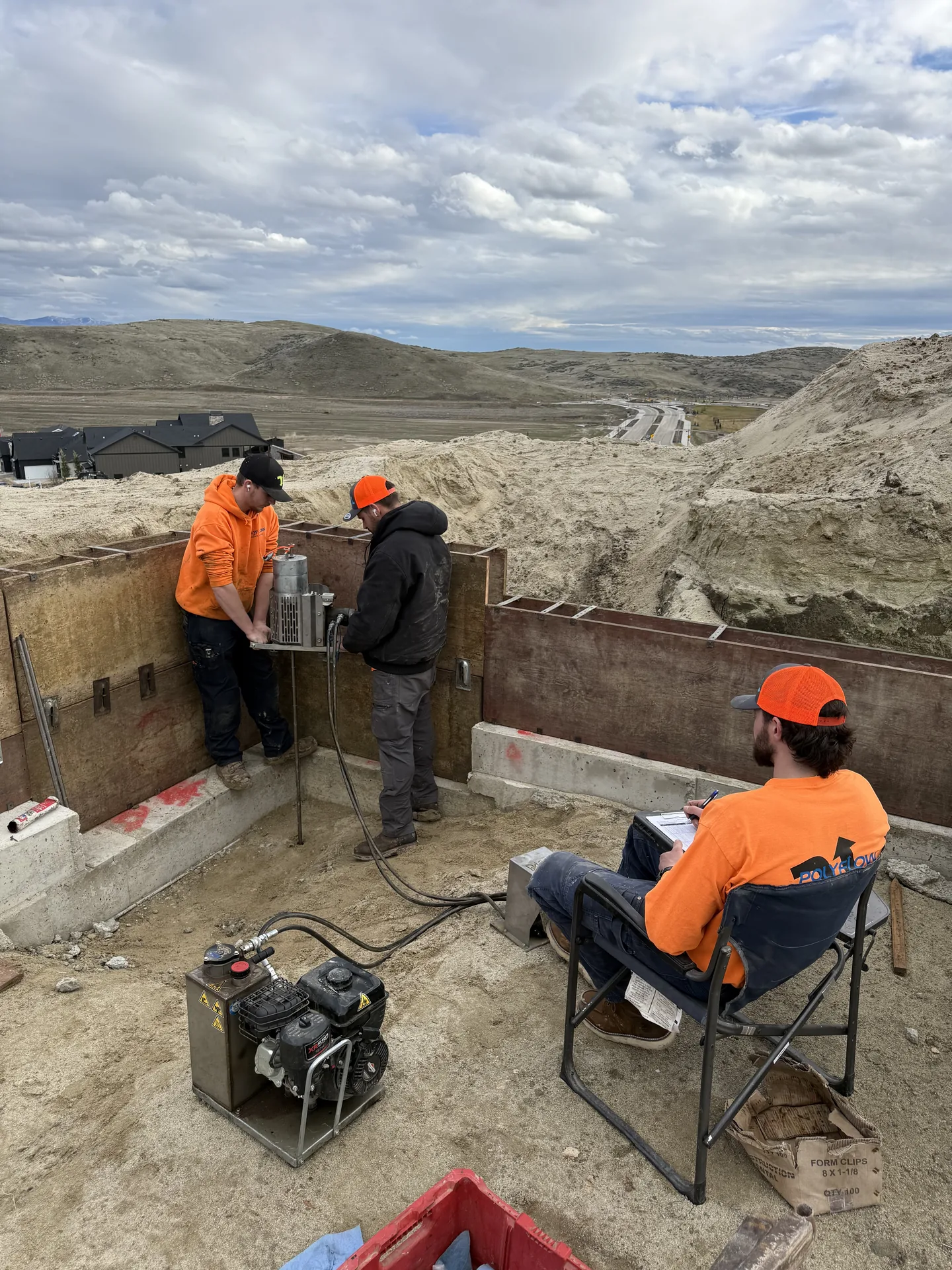
Patio settlement often develops in backfill next to the home, especially where irrigation, downspouts, or ponding repeatedly wet the slab edge.
Sidewalk panels can settle over utility trenches or along heavily irrigated landscape strips.
Fine soils can hold moisture while disturbed fill consolidates, so foundation movement should be evaluated separately from nearby patio or walkway settlement.
Regional geology provides context, but the repair decision depends on what is happening at the property. These are the questions that connect the local setting to an individual diagnosis.
Compare irrigated landscape strips and downspout outlets with drier sides of the building perimeter.
Measure the affected Nampa slab against doors, walls, curbs, drains, and neighboring panels to distinguish settlement from an original slope.
Check whether fine native soil, former agricultural ground, and residential backfill respond differently under load.
Record wall cracks, binding doors or windows, floor slope, and separation at porches or stem walls. Structural symptoms should not be diagnosed from a nearby patio alone.
Nampa spreads across gently sloping terraces and former irrigated agricultural land in the western Treasure Valley. That local setting can affect where water travels, how fill consolidates, and whether settlement is limited to one slab or reaches deeper support. Poly Flow starts with testing, then recommends the service that addresses the measured condition.
For Nampa patios and sidewalks, lifting can restore settled slabs when the concrete is sound and the weak support is shallow enough to treat. Patio settlement often develops in backfill next to the home, especially where irrigation, downspouts, or ponding repeatedly wet the slab edge.
Explore concrete liftingFoundation symptoms need a deeper evaluation than an uneven patio or walkway. In Nampa, fine soils can hold moisture while disturbed fill consolidates, so foundation movement should be evaluated separately from nearby patio or walkway settlement.
Explore foundation repairOpen joints and cracks give runoff, snowmelt, or irrigation a path beneath residential concrete. Sealing appropriate openings can help protect repaired support from continuing water entry in Nampa.
Explore crack & joint sealingWhen testing finds deeper weak zones or voids, lifting the surface alone may not address the cause. Silty loams, fine alluvial and lake-bed sediments, and pockets of sand or gravel are common regional conditions. Residential fill varies by development era.
Explore soil stabilizationA low patio edge, uneven sidewalk, or foundation symptom can have several causes. Poly Flow checks the site and measures the soil so the recommendation matches the depth of the problem.
Patio settlement often develops in backfill next to the home, especially where irrigation, downspouts, or ponding repeatedly wet the slab edge. The condition can be highly localized, so the surrounding grade, downspouts, irrigation, and support beneath the slab should be checked before selecting a repair.
Sidewalk panels can settle over utility trenches or along heavily irrigated landscape strips. If the panel is still structurally sound, polyurethane lifting may restore the elevation without demolition. Cracked or badly deteriorated concrete may need a different approach.
Nampa spreads across gently sloping terraces and former irrigated agricultural land in the western Treasure Valley. Fine soils can hold moisture while disturbed fill consolidates, so foundation movement should be evaluated separately from nearby patio or walkway settlement. Soil-resistance readings help distinguish a shallow slab problem from movement that reaches a footing or deeper support layer.
Silty loams, fine alluvial and lake-bed sediments, and pockets of sand or gravel are common regional conditions. Residential fill varies by development era. A single property can include native soil, utility trenches, foundation backfill, imported base, and other disturbed material, so broad regional soil descriptions cannot replace on-site testing.
Sound patios and sidewalk panels may be candidates for concrete lifting. Open water paths may also need crack and joint sealing. Deeper weak soil can call for stabilization, while structural movement may require foundation repair. Poly Flow tests first so the recommendation matches the problem.
Estimates are free and done on site. We test the soil before we quote, so the price reflects the actual problem.